Advanced treatment plans for hair restoration.
Treatments backed by clinical evidence
Hair regrowth in 3 to 6 months
Fully online with confidential delivery

Early intervention helps prevent worsening and encourages regrowth.
Treatments focus on the scalp to stop the obvious signs of male hair loss.
Treatments can reverse follicle shrinkage, helping to restore a fuller, more youthful hairline.
Daily use of finasteride or minoxidil slows hair thinning and encourages thicker, healthier hair.
Finasteride and minoxidil are two hair loss treatments that, when combined, have been shown to improve hair loss in 94% of men.
Both treatments are also effective individually. Finasteride alone can halt male pattern baldness in 83% of men, while minoxidil has been found to help 70% of men see improvements in hair loss.

Explore effective options for hair loss.
You’ll be assessed by our UK-based clinicians via a simple consultation.
Your medication will be delivered swiftly in unmarked packaging. Repeat prescriptions keep you topped up, and you can switch any time if you wish to try alternative treatments.
We support you every step of the way. Reach your medical team anytime through phone or email.
Hair loss becomes more common with age, though it can also affect men at a younger stage. While there are several types of hair loss, the most prevalent is male pattern baldness, primarily driven by genetics and the hormone dihydrotestosterone (DHT).
Certain treatments can help prevent hair loss, particularly when started early. Finasteride works by addressing the underlying cause of male pattern baldness, while minoxidil supports hair health at the follicle level. When used together, they can enhance overall results.
Learn how scientifically proven hair loss treatments combat the two primary causes of male pattern baldness: dihydrotestosterone (DHT) and follicle shrinkage.
Over time, DHT causes hair follicles to shrink, leading to thinner, shorter hair and eventually halting growth entirely.
Finasteride inhibits the enzyme responsible for producing DHT, preventing it from attaching to hair follicles and causing long-term damage.
Minoxidil stimulates damaged follicles by boosting blood flow and nutrient delivery, helping your scalp grow thicker, healthier hair to replace thin, weak strands.
Hair regrowth is a gradual process, so noticeable changes may be minimal during the first one to three months.
After three to six months of consistent use as directed, hair loss should begin to slow, and new hairs should start to appear. These initial hairs might be soft and light but will thicken over time.
After six months, hair loss should reduce significantly, and thicker, fuller hair should start to fill in thinning areas. You should see improved scalp coverage with stronger, healthier-looking hair.
Finasteride combats male pattern baldness by reducing the effect of DHT (dihydrotestosterone) on hair follicles. DHT is a natural hormone that shortens the growth phase of the hair cycle, causing follicles to shrink and produce thinner, shorter hairs. Eventually, the growth phase becomes so brief that hairs stop growing altogether.
Finasteride works by blocking 5-alpha-reductase, the enzyme responsible for converting testosterone into DHT. This leads to a significant reduction (about 60%) of DHT in the scalp, helping to prevent further hair loss and often encouraging hair regrowth.
Minoxidil helps reduce and reverse male hair loss by:
A clinician will recommend the safest and most effective treatment tailored to your needs, preferences, and lifestyle.
Finasteride is a daily tablet that slows hair loss and encourages regrowth. It’s especially effective for treating a receding hairline and is a popular option for those who haven’t seen desired results with minoxidil.
The Hair Kit: Spray, Tablets & Supplements combines finasteride—a clinically proven hair loss medication—with a hair-stimulating supplement to maximize results.
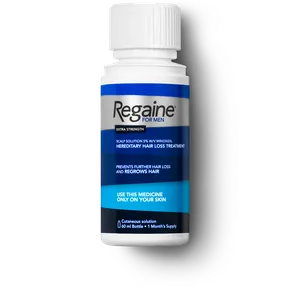
Regaine is another treatment option that targets areas of the scalp affected by male pattern baldness. Its active ingredient, minoxidil, is clinically proven to promote hair regrowth. Regaine also includes three applicators for precise application to support hair growth.
Hair loss treatments are designed for men aged 18-65 experiencing mild to moderate male pattern hair loss.
Finasteride, Regaine For Men Extra Strength (also called “Regaine extra strength”), and Medicated Hair Spray/Foam are not intended for use by women. Please refer to the Patient Information Leaflet included with all our hair loss treatments for a complete list of warnings and precautions. It’s important to read this leaflet carefully before beginning treatment.
Like most medications, hair loss treatments may cause side effects, although not everyone experiences them. It’s important to be aware of potential side effects before starting any hair loss medication, as this information can help you use the treatment safely and effectively.
Minoxidil
Common side effects include:
If you experience any of these side effects, stop using the treatment and consult a healthcare professional.
Finasteride
Some men taking finasteride 1mg may experience changes in sexual function. Clinical trials show that about 1.5% of men reported symptoms such as erectile dysfunction, reduced libido, or ejaculatory issues. These symptoms usually resolve after stopping treatment in over 99% of cases, but in rare instances, they may persist.
Other uncommon side effects of finasteride include testicular pain, depression, suicidal thoughts or behaviors, and breast tissue growth or tenderness.
A full list of possible side effects is included in the Patient Information Leaflet provided with every treatment. It’s important to read this leaflet carefully before starting treatment.
The time it takes to see reduced hair loss and new hair growth varies depending on the treatment you use. Since hair growth is naturally slow, it usually takes several months before any changes become noticeable. This is normal, and the best results typically appear after six months of consistent treatment.
Keep in mind these are general guidelines, and the timeframe can vary from person to person. Some individuals may see improvements sooner, while for others, it might take longer. Staying consistent with your treatment is important, as hair regrowth tends to improve the longer the treatment is used.
If you choose to stop using your hair loss treatment, the hair you regrew during treatment will likely be lost within three to four months. For optimal results, it’s important to continue using the treatment consistently.
To support your hair regrowth journey, we’ll send you a monthly refill of your treatment, so you don’t have to worry about running out. Staying consistent with your medication helps maintain the hair you’ve regained and promotes ongoing hair growth.
Don’t worry if you miss a day of your hair loss treatment. While these treatments are most effective when used consistently, it usually takes three to four months for regrown hair to be lost after stopping treatment. So, skipping a single day shouldn’t affect your hair coverage.
Important: If you miss a dose, do not double up to make up for it. Just continue with your regular treatment schedule the next day.